Your physical environment directly impacts energy, focus, and mood.
💡
Light Optimization
Bright blue-enriched light in the morning, warm dim light at night. A $30 smart bulb can regulate your circadian rhythm better than any supplement.
LightingHigh-Impact
🌡️
Temperature Control
68-72°F for focus, 65°F for sleep. Cool environments boost alertness. Your thermostat is a free cognitive enhancer.
TemperatureFree
🌱
Air Quality
CO2 above 1000ppm impairs cognition by 15%. Open windows, add plants (snake plant, pothos), or get an air purifier.
AirUnderrated
🔇
Sound Environment
Consistent background noise (brown noise, rain) beats silence for focus. Noise-cancelling headphones are a productivity investment.
SoundFocus
Habits
Daily Energy Habits
The free fundamentals that outperform any supplement.
☀️
Morning Sunlight
10 minutes of outdoor light within 30 minutes of waking. Sets circadian clock, boosts cortisol awakening response, improves mood all day.
MorningCritical
🚶
Walking Breaks
5-minute walk every 90 minutes. Restores attention, reduces eye strain, and boosts creative thinking. The cheapest nootropic.
MovementFree
🥤
Hydration Timing
16oz water upon waking. Sip consistently throughout the day. Dehydration of just 2% impairs cognitive performance measurably.
HydrationDaily
FAQ
Frequently Asked Questions
Free Tool
Daily Water Intake Calculator
Adequate intake figures cover all water you take in, including what comes from food. Enter your details to see your daily target in liters and cups, and how much of it should come from drinks.
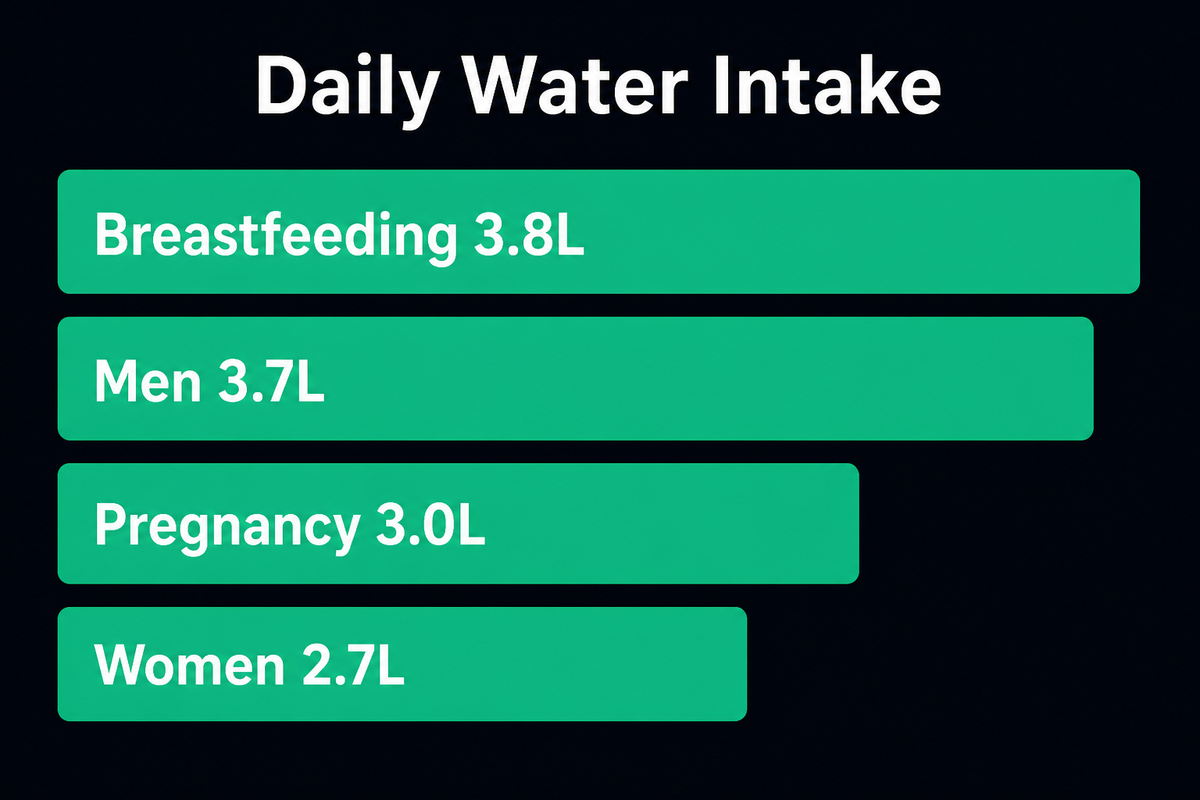
Baseline totals come from the National Academies adequate intake values: about 3.7 liters a day for men and 2.7 for women, roughly 3.0 in pregnancy and 3.8 while breastfeeding. About 20 percent of that total normally comes from food, so the drink target is the smaller number. Add about 0.4 liters per 30 minutes of exercise. Individual needs vary with medication and health conditions.
Hydration
How Much Water Is Actually Enough
The eight-glasses rule has no scientific basis. The real reference figures are higher, they differ by situation, and they count water from food as well as drinks.
National Academies adequate intake figures for total daily water, food included.
These are total water figures from the National Academies, and roughly 20 percent normally comes from food. Needs rise with heat, altitude, and exercise.